Commercial Waste Removal Health & Safety Policy — Beckenham Rubbish Services
 This Health and Safety Policy sets out the commitments and operational standards for commercial waste removal and rubbish collection services operating in our service area. It explains responsibilities, hazard controls and required behaviours to protect staff, contractors, clients and the public. The policy applies to all activities associated with commercial waste collection, transportation, transfer and disposal and supports a proactive safety culture across the rubbish company service area.
Our objectives are to prevent injuries, reduce occupational ill-health, protect property and the environment, and ensure compliance with applicable safety obligations. Staff wellbeing is central to operations: safe systems of work will be designed, communicated and monitored. Continuous improvement is expected through incident review, risk assessment and ongoing training.
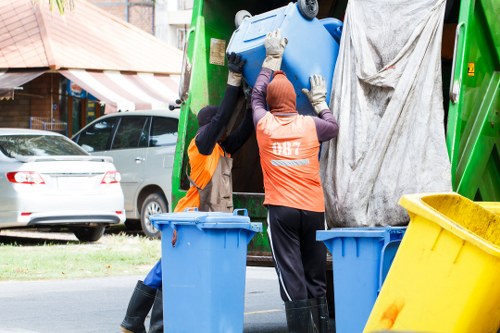 This document emphasises safe working practices for commercial rubbish removal teams, including route planning, vehicle loading, manual handling, segregation of waste streams and controls for hazardous materials. It references safe operating limits for lifting, the use of mechanical aids and the hierarchy of controls to eliminate or reduce risks during collection and transfer activities.
Scope, Roles and Responsibilities
Management has the overall responsibility to provide adequate resources, competent supervision and a framework for implementing this policy. Line managers must ensure risk assessments are current and that safe working procedures are followed on every job. Employees and subcontractors must follow written instructions, use issued personal protective equipment (PPE) and report safety concerns without delay.
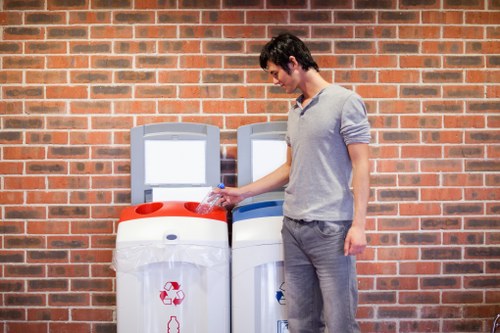 Key responsibilities include maintaining vehicle roadworthiness, ensuring load security, applying correct segregation for general, recyclable and hazardous waste, and following waste transfer documentation. A formal handover process is required whenever duties change between shifts or teams to maintain continuity and safety.
Controls and routines include:
- Pre-shift vehicle checks and defect reporting
- Use of PPE such as gloves, high-visibility clothing, respiratory protection where required, and steel-toe footwear
- Safe manual handling techniques and use of trolleys, hoists or lifting equipment
Hazard Management and Safe Systems
Risk assessments identify hazards including sharps, chemical exposure, biological waste, traffic and reversing vehicles, falls from height and ergonomic strain. Where risks cannot be eliminated they will be controlled through substitution, engineering controls, administrative measures and PPE. Permit-to-work arrangements apply for non-routine tasks and hazardous collections.
 Training and competence are essential. All operatives must complete induction, role-specific instruction and refresher training. Training covers safe loading techniques, containment of spillages, use of spill kits, emergency response, basic first aid and recognition of controlled waste types. Supervisors must verify competence before assigning complex tasks.
 Vehicle and plant safety measures include daily safety checks, safe reversing procedures with banksman where necessary, securement of loads to prevent shifting during transit, and segregated storage of incompatible waste. Drivers must comply with driving time regulations and rest requirements to prevent fatigue-related incidents.
Incident reporting and investigation procedures require immediate notification of all accidents, near misses and dangerous occurrences. Investigations identify root causes and result in actionable recommendations; lessons learned are communicated across the rubbish removal service area to prevent recurrence. Where appropriate, corrective actions will be tracked to completion.
Environmental protection measures include containment of leachate, control of airborne dust, and responsible waste transfer procedures. Spill response plans and containment materials must be carried on vehicles and staff trained in their use to reduce environmental and health impacts from accidental releases.
Contractor and third-party management: contractors engaged to assist with collections or site work must demonstrate competency, hold appropriate insurances and abide by this policy. Coordination meetings and documented site briefings are required for shared operations to ensure consistent safety standards.
Monitoring and performance indicators will measure incident rates, near-miss reporting, training compliance and vehicle safety records. Regular health and safety audits and toolbox talks will be used to maintain focus on key risks and to embed safer working practices throughout the rubbish company service area.
Occupational health provision includes access to health surveillance where appropriate, vaccination programs for biological risk exposure, and support for injury recovery and return-to-work planning. Wellbeing initiatives encourage staff to raise concerns and participate in safety committees.
Review: this policy will be reviewed at planned intervals and after significant incidents or changes in operations. Documented revisions will be issued and communicated so that all staff and contractors understand the current standards and expectations for safe commercial waste removal operations.
Adoption of this policy is mandatory for all personnel engaged in commercial waste collection and rubbish disposal within our service area. Management will ensure resources are available to maintain compliance and to foster a safety-first culture that protects people, property and the environment.
Signed and endorsed by senior management, this policy forms the basis for operational procedures and daily workplace behaviour. All employees are expected to read, understand and act in accordance with its terms to achieve a consistent, safe and professional rubbish removal service.